Finding reliable halal food in a new city can take more planning than choosing attractions or booking a hotel. In Chongqing, one of the easiest places for Muslim travelers to begin is Jiaochangkou, a central neighborhood within walking distance of Jiefangbei, Shibati and several of the city’s most popular sights
Around Zhongxing Road and the Chongqing Muslim Building, visitors will find a year-round cluster of halal restaurants serving Chongqing hotpot, beef noodles, lamb skewers, hand-pulled noodles and dishes from northwestern China.
This is not a formal pedestrian food street or a temporary festival. It is an established Muslim dining area made up of restaurants and small food businesses located within a compact neighborhood.
The Quick Answer
If you are staying in central Chongqing and need halal food, head to the area around the Chongqing Muslim Building on Zhongxing Road.
The easiest route is:
- Take Chongqing Metro Line 1 or Line 2.
- Get off at Jiaochangkou Station.
- Use Exit 4 and walk toward Zhongxing Road.
- Look for restaurants displaying the Chinese characters 清真, which mean “halal.”
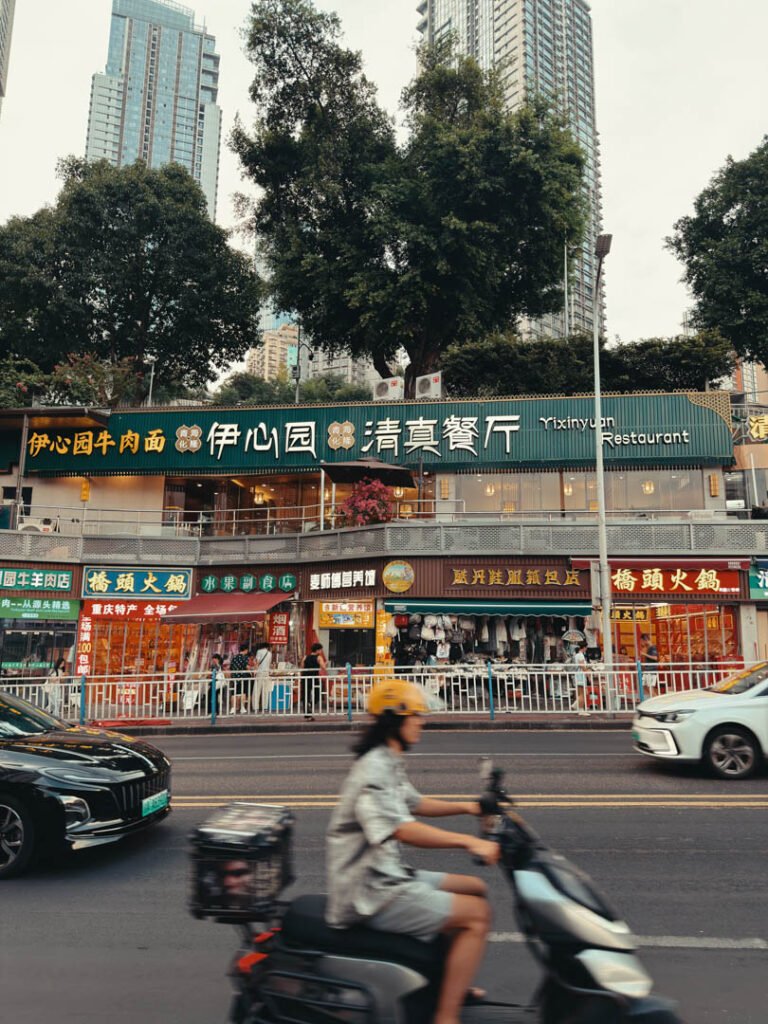
Why Jiaochangkou Is Useful for Muslim Travelers
Jiaochangkou is one of the most convenient dining areas for Muslim visitors staying near Jiefangbei. Unlike halal restaurants scattered across different parts of the city, the options here are concentrated within a relatively small area. If one restaurant is closed, full or unsuitable for your group, you can usually continue walking and look for another option nearby.
The location is another advantage. Jiaochangkou is close to:
- Jiefangbei Pedestrian Street
- Shibati Traditional Scenic Area
- Bayi Road Food Street
- Shancheng Alley
- The Yangtze River Cableway
- Hongya Cave
Halal choices become less predictable around some of Chongqing’s busiest tourist attractions. Planning lunch or dinner in Jiaochangkou can therefore make a day in central Chongqing much easier.
You can explore Jiefangbei and the surrounding sights, return to Jiaochangkou for a reliable meal, and then continue sightseeing without making a long journey across the city.
A Brief History of Jiaochangkou
Jiaochangkou has been an important part of central Chongqing for centuries.
Its name comes from the military training grounds that once occupied the area. As Chongqing grew, the former drill grounds gradually became markets, commercial streets and residential neighborhoods.
The area’s halal food culture developed around Chongqing’s long-established Muslim community. Restaurants and food shops gathered near the local mosque and surrounding streets to serve Hui Muslim families, worshippers, merchants and travelers.
Today, the Muslim Building and the restaurants around Zhongxing Road continue that connection between community life and halal dining.
What Can You Eat in Jiaochangkou?
Jiaochangkou gives Muslim travelers an opportunity to try several types of Chinese food, including halal versions of Chongqing specialties.
Halal Chongqing Hotpot
For many visitors, halal Chongqing hotpot is the main reason to come here.
The experience is similar to traditional Chongqing hotpot: a pot of spicy broth is placed in the center of the table, and diners cook their own meat, vegetables, tofu and mushrooms.
At a dedicated halal restaurant, the meat selection usually focuses on beef and lamb. Some restaurants also offer seafood and a wide variety of vegetables.
Chongqing hotpot can be extremely spicy. If this is your first time, ask for mild spice or a divided pot with both spicy and non-spicy broth.
Do not assume that an ordinary Chongqing hotpot restaurant is halal simply because it offers beef or lamb. Traditional hotpot broth may contain animal fat, cooking wine or other unsuitable ingredients. A restaurant displaying clear halal signage is the safer choice.
Halal Chongqing Noodles
Chongqing noodles are a good option for breakfast or a quick lunch.
A typical bowl may contain noodles, beef, spring onions, chili oil, sesame and Sichuan pepper. The flavor is usually savory, spicy and slightly numbing.
If you do not eat spicy food, ask whether the restaurant can prepare a mild or non-spicy version. Remember that “not spicy” may still include some pepper or seasoning, so explain your preference clearly.
Lamb Skewers and Grilled Meat
Restaurants influenced by Xinjiang and northwestern Chinese cuisine often serve lamb skewers seasoned with cumin, salt and chili.
Other grilled choices may include beef skewers, chicken, flatbread and vegetables. These dishes are easy to share and can be a good choice for travelers unfamiliar with Chinese menus.
Northwestern Chinese Food
You may also find hand-pulled noodles, beef dumplings, flatbread, rice dishes and spicy chicken.
These restaurants can be useful for groups because they usually offer both strongly seasoned food and milder dishes. Portions may be generous, so ask the staff before ordering several large dishes.
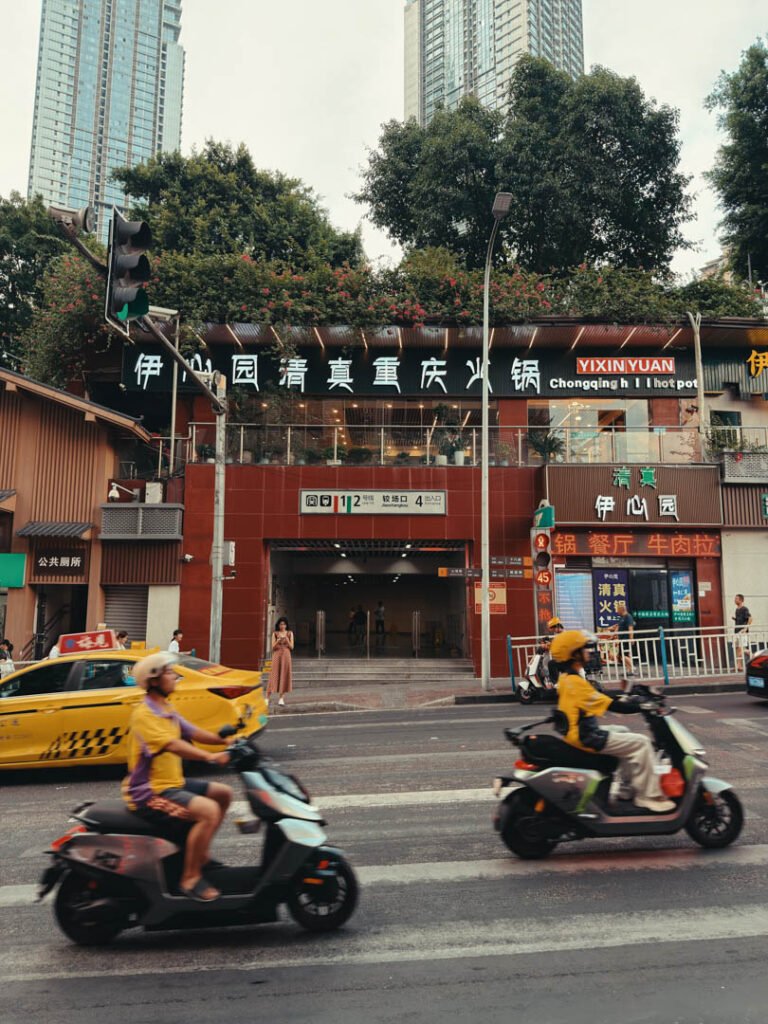
How to Recognize a Halal Restaurant
The most important sign to look for is:
清真 — Qīngzhēn — Halal
These characters may appear above the entrance, on the restaurant sign, beside the menu or near the cashier.
Halal restaurants may also use green signage, mosque imagery, crescent symbols or Arabic writing. However, colors and decorative symbols alone are not enough. The Chinese characters 清真 are the clearest starting point.
A restaurant serving beef, lamb or Xinjiang-style food is not automatically halal. If there is no clear halal sign, ask the staff before ordering.
Travelers with strict dietary requirements should confirm more than whether a dish contains pork. You may also need to ask about:
- The source of the meat
- Lard or other animal fats
- Cooking wine
- Hotpot broth
- Sauces and seasonings
- Shared cooking utensils
- Shared grills or preparation areas
Saying “I do not eat pork” does not communicate every halal requirement. Whenever possible, begin by asking whether the restaurant itself is halal.
Useful Chinese for Muslim Travelers
Save the Address in Chinese
Save a screenshot of the Chinese address or restaurant name before leaving your hotel. This will make it easier to ask for directions or show the destination to a taxi driver.
Mobile maps sometimes place entrances on the wrong level in Chongqing. If the destination appears very close but you cannot see it, check whether it is above you, below you or on the opposite side of a large road.
Look Beyond English Menus
Many restaurants in the area mainly serve local customers, so English menus may not always be available.
Menus with photographs are common. Translation apps can help, but automatic translations of ingredients are not always accurate. If you have a strict dietary requirement, show the staff a complete Chinese sentence rather than relying only on a translated dish name.
Confirm the Spice Level
Chongqing’s idea of “mild” may still feel spicy to international visitors.
If you are sensitive to chili, ask for very mild spice or no chili. For hotpot, a divided pot can allow different people at the table to choose different broths.
Avoid Assuming Street Snacks Are Halal
The wider Jiaochangkou and Jiefangbei areas contain many ordinary snack stalls. Some may use pork, lard, cooking wine or shared oil.
Even if a snack looks vegetarian, the sauce or cooking oil may contain ingredients you wish to avoid. Dedicated halal restaurants are generally easier to verify than unmarked street stalls.
Carry a Translation Screenshot
Internet access or translation apps may not always work smoothly. Save the most important Chinese phrases below as a screenshot so you can use them offline.
Useful Chinese for Muslim Travelers
Essential Words
清真
Qīngzhēn
Halal
清真餐厅
Qīngzhēn cāntīng
Halal restaurant
猪肉
Zhūròu
Pork
猪油
Zhūyóu
Lard
料酒
Liàojiǔ
Chinese cooking wine
Questions to Ask
这是清真的吗?
Zhè shì qīngzhēn de ma?
Is this halal?
这里是清真餐厅吗?
Zhèlǐ shì qīngzhēn cāntīng ma?
Is this a halal restaurant?
这个菜里面有猪肉吗?
Zhège cài lǐmiàn yǒu zhūròu ma?
Does this dish contain pork?
这个菜里面有猪油吗?
Zhège cài lǐmiàn yǒu zhūyóu ma?
Does this dish contain lard?
这个菜里面有料酒吗?
Zhège cài lǐmiàn yǒu liàojiǔ ma?
Does this dish contain cooking wine?
这个肉是清真的吗?
Zhège ròu shì qīngzhēn de ma?
Is this meat halal?
这些餐具是分开使用的吗?
Zhèxiē cānjù shì fēnkāi shǐyòng de ma?
Are these utensils used separately?
Explaining Your Requirements
我是穆斯林。
Wǒ shì Mùsīlín.
I am Muslim.
我只吃清真食品。
Wǒ zhǐ chī qīngzhēn shípǐn.
I only eat halal food.
我不吃猪肉。
Wǒ bù chī zhūròu.
I do not eat pork.
请不要放猪油和料酒。
Qǐng bú yào fàng zhūyóu hé liàojiǔ.
Please do not add lard or cooking wine.
Choosing the Spice Level
我要微辣。
Wǒ yào wēilà.
I would like it mildly spicy.
请做得非常清淡。
Qǐng zuò de fēicháng qīngdàn.
Please make it very mild.
不要放辣椒。
Bú yào fàng làjiāo.
Please do not add chili.
可以做鸳鸯锅吗?
Kěyǐ zuò yuānyāngguō ma?
Can we have a divided hotpot?
Planning a Muslim friendly trip to Chongqing?
Chongqing Journey by Jackson offers private and customized tours designed around your interests, travel pace and halal dining needs. Contact us to create a personalized Chongqing itinerary with local guidance from arrival to departure!